Can a Loose Dental Crown Be Repaired?
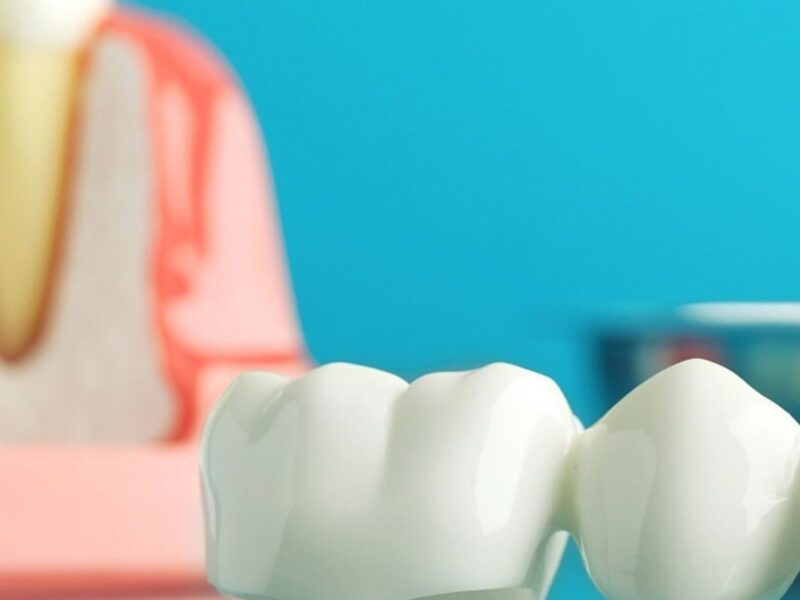
A loose crown can sometimes be repaired, but not always, and the difference matters more than most people realize. Some crowns simply need to be cleaned and re-cemented. Others are telling you that Dental Crowns something has changed underneath, such as decay at the margin, a weakened core, a cracked tooth, or a crown that no longer fits the way it should. From the patient’s perspective, both situations often feel the same: the crown moves, bites oddly, or even comes off in your hand while eating toast. Clinically, they are very different problems.
That is why the right question is not just whether a loose dental crown can be fixed, but what made it loosen in the first place. A crown is not supposed to shift. When it does, the cause determines whether your dentist can reattach the same crown, modify it, or recommend a replacement.
In practice, many loose crowns are repairable, at least in the short term. Quite a few can be successfully re-cemented and function well for years. Just as many should not be glued back on without a closer look. A crown that keeps coming loose is rarely just being troublesome. It is usually signaling a problem that needs attention.
What “repair” means with a loose crown
Patients often use the word “repair” to mean anything that saves the crown and avoids a full replacement. In dentistry, that can include several very different approaches.
The simplest version is re-cementation. The crown is removed if it has not already come off, the inside is cleaned, the tooth is evaluated, and if everything looks sound, the crown is bonded or cemented back in place. This is the best-case scenario. It tends to happen when the crown itself is intact, the tooth underneath is stable, and the original cement has simply failed over time.
Another version involves minor correction before re-cementing. The dentist may smooth an area that is interfering with the bite, adjust the contact between teeth, or address a small problem with the tooth buildup underneath. These are Dental Crowns modest repairs, but they still count as saving the existing crown.
Then there are cases where the crown is loose because the foundation has changed. If decay has formed under the edge, if the underlying tooth has fractured, or if a root canal tooth has lost part of its core, the crown may be salvageable, but the supporting tooth needs treatment first. In some cases the old crown can go back on after that work. In others it cannot.
Finally, there are situations where “repair” is not realistic. A porcelain crown with a compromised fit, a crown that has been distorted, or a tooth with extensive damage may need a new restoration entirely. That can be frustrating, especially if the crown is not very old, but reusing a crown that no longer seals properly usually costs more in the long run.
Why crowns come loose
Crowns do not loosen for one single reason. They loosen because retention has been lost, and that loss can happen mechanically, biologically, or both.
One common cause is cement breakdown. Dental cements are durable, but they are not immortal. Years of chewing pressure, temperature changes, moisture, and natural wear can weaken the bond. Older crowns often come loose this way, especially if the shape of the prepared tooth underneath did not offer ideal retention to begin with.
Decay at the margin is another major cause. The margin is the border where the crown meets the tooth. If plaque lingers there, or if the margin was difficult to clean from the start, bacteria can slip underneath and begin undermining the remaining tooth structure. The crown may still look fine from above while the edge is failing below. Many patients are surprised to hear that a crown can have a cavity underneath it, but it happens regularly.
Bite forces matter more than people think. If a crown is hitting too hard, especially on someone who clenches or grinds, that repetitive stress can loosen the cement or damage the core beneath the crown. Night grinding often shows up in subtle ways first: a crown feels “high,” a tooth feels sore in the morning, or the crown loosens more than once over a few years.
The design of the original tooth preparation also plays a role. Short teeth, heavily broken teeth, and molars with limited wall height can be difficult to crown securely. Even with good technique, some teeth simply offer less natural grip. That does not mean the crown was poorly made. It means the situation was mechanically less forgiving from the outset.
Less commonly, trauma is the trigger. A hard knock to the mouth, biting an olive pit, chewing ice, or even sticky candy can dislodge a crown. In those cases the crown may be perfectly reusable, but the dentist still needs to check for hidden cracks.
When a loose crown can be re-cemented
The most straightforward cases share a few traits. The crown is intact. The tooth under it has not decayed significantly. The fit is still precise. The crown came loose because the cement failed, not because the biology or mechanics failed first.
A classic example is an older crown that pops off while flossing or chewing something chewy. The patient brings the crown in, it seats cleanly on the tooth, the margins look good, there is no active decay, and the X-ray does not show anything alarming. Those crowns are often excellent candidates for re-cementation.
This is also more likely when the crown has only recently become loose. A crown that has been wobbling for months tends to collect bacteria and food debris under the edge. The longer it moves, the greater the chance that the fit has changed or the tooth has been damaged.
Material matters a little, but not as much as patients assume. Metal crowns, porcelain-fused-to-metal crowns, and many all-ceramic crowns can all sometimes be re-cemented successfully. The key issue is not the material alone. It is whether the internal surface and margin remain clean, intact, and retentive.
If the crown came off whole and has been kept safely, do not try to “test” it repeatedly by pushing it on and off the tooth. That can traumatize the area and make evaluation harder. In clinic, a crown that still seats with a stable, passive fit is far more promising than one that rocks, binds, or no longer settles fully.
When reattaching the same crown is a bad idea
A loose crown should not be put back just because it can physically be placed over the tooth. It has to fit accurately enough to protect what remains underneath. A crown that traps bacteria at the margin, even by a small amount, can set the stage for more decay and a much larger repair later.
If the crown has a crack, a chipped internal surface, or a distorted edge, re-cementing it may buy only a short interval before failure. I have seen crowns that looked acceptable in a patient’s hand but, under magnification, had subtle internal damage that prevented full seating. Those are the cases that often come back with pain, food trapping, or recurrent loosening.
Decay changes the equation quickly. A tiny, cleanable spot near the margin is one thing. Broader decay that has softened the tooth or altered the shape of the preparation is another. Once the original geometry is lost, the crown may no longer adapt closely enough to be safe, even if it still goes on.
A fractured buildup or a crack in the natural tooth is a more serious concern. Teeth that have already required crowns are often structurally compromised to begin with. If part of the supporting tooth has broken away, simply re-cementing the crown can hide a problem that will worsen under chewing force.
There is also the issue of repeated failure. A crown that has come loose once after ten years is not unusual. A crown that has come loose three times in eighteen months usually needs a more thorough rethink. At that point, the dentist is looking beyond the cement to the bite, the remaining tooth structure, and whether a new crown design would perform better.
What your dentist looks for at the appointment
The examination is usually more revealing than the looseness itself. Dentists are not just trying to put a crown back on. They are deciding whether it can still function as a sealed, durable restoration.
They will assess the crown margin, check for recurrent decay, inspect the internal surface, and see whether the crown seats completely. That often includes an X-ray to evaluate the tooth below the gumline and around the root. On root canal-treated teeth, the post and core or buildup may need especially careful evaluation, because failure there is easy to miss until the crown becomes mobile.
The bite is another important piece. If the crown is being overloaded, re-cementing without correcting the bite can turn the appointment into a temporary patch. This is particularly relevant for back teeth and for patients with wear facets, jaw tension, or a known history of clenching.
Sometimes the gum tissue tells part of the story. A margin that has been leaking may create localized inflammation, bad taste, tenderness, or bleeding when the crown is removed. Even if the crown itself looks decent, unhealthy tissue around one crowned tooth can be a clue that the seal has not been sound for some time.
Signs that call for faster care
A loose crown is rarely a midnight emergency, but there are moments when it should be seen sooner rather than later. Time matters because exposed tooth structure is vulnerable, and because a crown that is not stable can be swallowed, aspirated, or damaged.
- Pain when biting or spontaneous throbbing
- Swelling, pus, or a bad taste near the crowned tooth
- A crown that will not stay seated at all
- Sharp edges cutting the tongue or cheek
- A loose crown on a front tooth where trauma may have affected the root
If none of those are present, you usually still want to contact your dentist within a day or two. Waiting a few weeks often turns a simple re-cementation into a more involved restorative visit.
What you can do before you get to the dentist
Home care should focus on protecting the tooth and the crown, not on performing your own permanent repair. Temporary dental cement from a pharmacy can sometimes help in a pinch, especially if you are traveling, but it should be thought of as a short bridge to professional care, not a substitute for it.
If the crown has come off, rinse it gently and keep it somewhere clean. Avoid wrapping it in tissue where it can be accidentally thrown away. If you can place it back over the tooth without forcing it, that may protect the area temporarily, but only if it seats passively and does not alter your bite. If it feels high or unstable, remove it.
Do not use super glue, household adhesive, or over-the-counter repair kits that promise a permanent bond. Dentists see this often enough to say it plainly: those products can damage the crown, irritate the tissues, and make proper re-cementation harder. Super glue in particular is a miserable thing to clean off delicate margins.
It also helps to chew on the other side and avoid sticky or very hard foods until you are seen. A loose or off crown leaves the prepared tooth more exposed, and that area can be surprisingly fragile, especially if much of the original tooth had already been lost.
Temporary fixes versus lasting treatment
There is a place for temporary re-cementation. If you are about to leave for a trip, if swelling is absent, and if the crown and tooth appear stable enough, a dentist may choose to reattach it with the understanding that a more definitive evaluation or replacement may follow. That can be reasonable, provided everyone is clear that the repair may not be the final answer.
The problem comes when a temporary solution is mistaken for a durable one. A crown that is repeatedly glued back onto a compromised tooth often ends up with a poorer long-term prognosis. The patient may feel they are saving money by postponing a remake, but they may be losing valuable tooth structure in the meantime.
That is especially true if decay is involved. Decay does not pause because a crown has been put back. If anything, the false sense of security can allow it to spread further before the next appointment.
How often a loose crown can be saved
There is no honest universal percentage because the answer depends on age of the crown, oral hygiene, bite forces, the amount of remaining tooth, and the material used. In everyday general practice, many loose crowns can be re-cemented successfully when patients present promptly and the underlying tooth is still healthy enough. In referral settings, where cases are often more complex, the proportion tends to be lower because those crowns have usually already failed one or more times.
The age of the crown is only one clue. A ten-year-old crown may still fit beautifully and go right back on. A two-year-old crown may be unsalvageable if the tooth fractured under it. Newer is not always better, and older is not automatically worse.
A detail patients rarely hear is that a crown can look fine from the outside while being unacceptable from the inside. The internal fit and the adaptation at the margin determine whether bacteria can sneak in. That is why your dentist may recommend replacement even when the visible porcelain still looks excellent.
The role of dental crowns in protecting a weakened tooth
It helps to remember what dental crowns are meant to do. A crown is not simply a cap glued onto a tooth. It is a custom restoration designed to redistribute bite forces, seal and protect vulnerable tooth structure, and restore function over a foundation that often has already lost a significant amount of natural enamel and dentin.
Because crowns are asked to protect compromised teeth, they depend heavily on what lies beneath. If the tooth has changed, the crown’s performance changes with it. This is one reason dentists can sound cautious when patients ask for a quick glue-back. The concern is not the crown alone. It is the survival of the tooth.
A well-fitting crown on a sound tooth can last many years. A crown on a cracked or decayed foundation cannot compensate for that weakness forever. Re-cementing may feel like solving the problem, but sometimes it is merely putting the lid back on a container whose base has already split.
If the crown needs replacement, what happens next
When replacement is the better option, the next step depends on how much healthy tooth remains. In some cases the tooth only needs decay removal, a new buildup, and a fresh impression or scan for a new crown. In more advanced cases, additional treatment such as root canal therapy, crown lengthening, or extraction may have to be discussed.
This is where judgment matters. Not every damaged crowned tooth should automatically be saved at all costs. If too little structure remains, if the crack extends too far, or if the prognosis is poor even with heroic treatment, replacement of the tooth may be the more sensible path. That is never the first thing patients want to hear, but it is sometimes the most responsible advice.
More often, though, the situation lands in the middle. The old crown cannot be trusted, but the tooth can still be restored predictably. A new crown with better retention, improved margins, and bite adjustment can provide a much longer-lasting result than repeatedly trying to rescue a failing one.
How to lower the chances of it happening again
Some failures are not preventable. Cement ages, accidents happen, and heavily restored teeth carry risks by nature. But a surprising number of loose crowns are linked to patterns that can be improved.
- Keep the margin clean with careful brushing and daily interdental cleaning
- See your dentist regularly so decay or bite issues are caught early
- Avoid chewing ice, hard sweets, and other habits that stress restorations
- Wear a night guard if you clench or grind
- Do not ignore a crown that feels high, moves slightly, or traps food
That last point is the one patients underestimate most. Crowns usually give some warning before complete failure. A faint movement, a strange taste, tenderness at the gumline, floss catching at the edge, or pressure when biting can all be early signs that the seal is changing. The earlier those signs are evaluated, the more often the crown can be saved.
The practical answer
Yes, a loose dental crown can often be repaired, and in many cases that repair is as simple as re-cementing it. But the success of that repair depends on the reason it came loose. If the crown is intact and the tooth underneath is healthy, reattachment can work very well. If decay, fracture, or poor fit is involved, repairing the situation may require more than just putting the crown back.
The most useful mindset is to treat a loose crown as a warning, not a nuisance. It may turn out to be a straightforward fix. It may also be the first visible sign of a bigger issue that is still manageable if caught early. Either way, prompt evaluation gives you the best chance of keeping both the crown and the tooth in good shape.
Simple Dental South Gate
Address: 8617 California Ave, South Gate, CA 90280
Phone number: +13236896118
FAQ About Dental Crowns
How much do crowns cost per tooth?
In the United States, a single dental crown typically costs between $800 and $2,500 per tooth without insurance. The ultimate out-of-pocket price depends heavily on the crown material, the location of the tooth, and whether you have dental insurance coverage.
What is the downside of crowns on teeth?
The primary downside of a dental crown is that the procedure permanently removes natural tooth enamel to shape the tooth for the cap.
Why do dentists push for crowns?
Dentists recommend crowns because a large filling cannot provide enough strength when a tooth loses a major portion of its structure or faces heavy chewing pressure.